New patients welcome. Call today to ask about dental implants, insurance, and payment plans, or book online anytime.
A missing tooth can change how you eat, speak, and smile. It can also leave the jawbone without the stimulation it needs, which may lead to bone loss over time. Dental implants replace the root of the missing tooth, so your bite, your jaw, and your smile stay supported for the long run.
At Designing Smiles, Dr. Ryan Rose places dental implants in our Westchase office as part of our full range of restorative dentistry services. Whether you are missing one tooth or several, we explain what a healthy, working result looks like before treatment begins, so you know what to expect at every step.
Tooth loss is more common than many people realize. Data from the Centers for Disease Control and Prevention show about 2 percent of U.S. adults ages 20 to 64 have lost all of their natural teeth, and the figure rises to 5.9 percent for adults ages 50 to 64. Even one missing tooth can affect your daily life in several ways:
Dental implants address all three by replacing the root structure a missing tooth leaves behind.

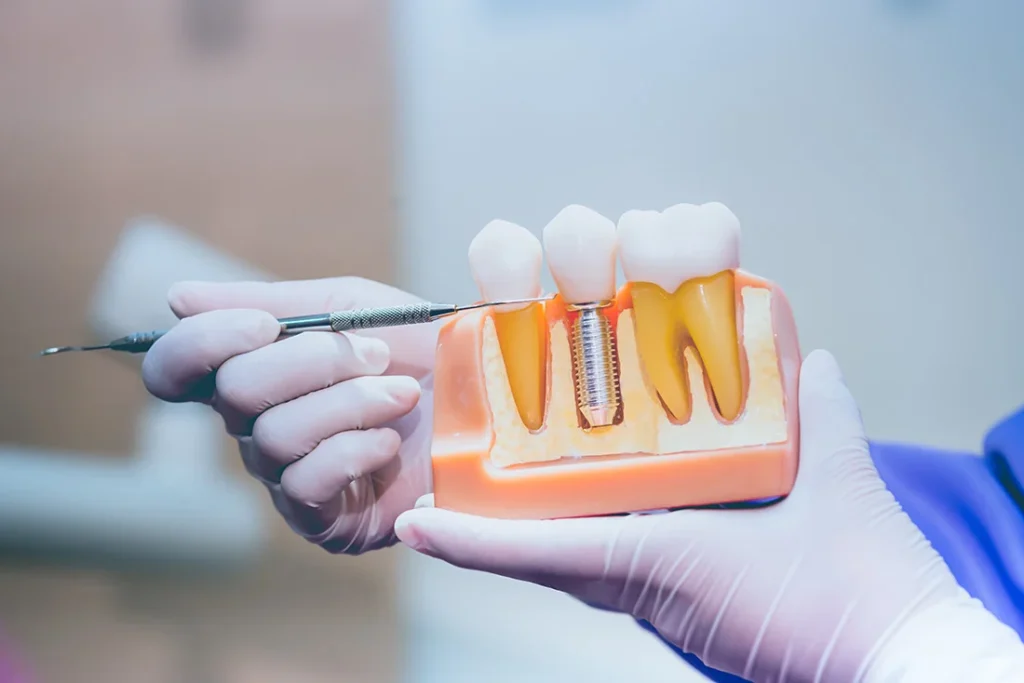
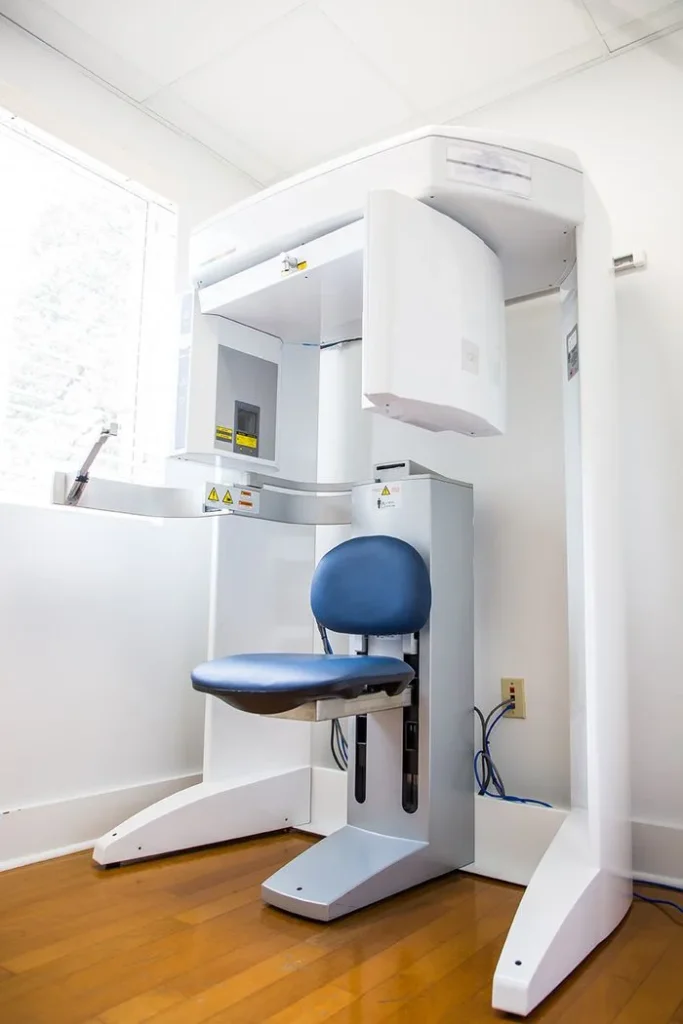
Your implant plan starts with an exam and, when appropriate, a 3D scan from our in-office CBCT, which helps Dr. Rose check your bone and plan exactly where the implant should go. A titanium post is then placed in the jawbone and given time to fuse with the bone in a process called osseointegration. Healing can take a few months, depending on your bone and your treatment plan. Once the post is stable, we attach an abutment and a custom implant crown shaped and shaded to match your surrounding teeth.
Some patients need preparation first, and that is normal. If your jawbone is too thin to hold an implant, a sinus lift or other bone grafting procedure can rebuild the foundation. If a damaged tooth has to come out first, we can plan the extraction and the implant together, so you are not juggling separate offices or waiting longer than necessary between steps.
Comfort matters too. Implant placement is usually done with local anesthesia, and we also offer oral and nitrous sedation dentistry options for patients who feel anxious. At your consultation, we can talk through which option fits your plan.
Implants can support more than a single crown. Implant-retained dentures anchor a full or partial denture to a small number of implants, which keeps the denture far steadier than one resting on the gums alone. That stability can make eating and speaking more comfortable, and it may help preserve jawbone that would otherwise keep shrinking under a traditional denture.
If you are still choosing between replacement options, this comparison shows how an implant crown stacks up against a bridge and a partial denture.
| Compare | Implant Crown | Dental Bridge | Partial Denture |
|---|---|---|---|
| Support | Anchored in the jawbone | Held in place by the teeth on either side | Rests on the gums and may clasp nearby teeth |
| Neighboring teeth | Left as they are | Reshaped to hold the bridge | May carry the clasps |
| Daily care | Brush and floss around it like a natural tooth | Clean underneath with floss threaders or similar tools | Removed each day for cleaning |
Each option fits different situations, so your bone, your gum health, and your goals all shape the best choice. Dr. Rose can review your bone structure and bite with you before recommending a direction.
Dr. Ryan Rose plans, places, and restores dental implants in our Westchase office, so you stay with one team from your first scan to your final crown. That means fewer handoffs and one place to ask questions at every stage.
We also work to keep cost from standing in the way of care. We accept a range of PPO insurance plans, including Delta Dental, Cigna, Aetna, and MetLife, and we offer payment plans for patients without coverage. No insurance, no problem. Coverage for implants varies by plan, so our team can review your benefits with you before treatment begins.
Treatment Plan
Implant Placement
Custom Restoration
Age alone does not decide whether implants are an option. We look at the health of your gums, the amount of bone in the area, and your medical history. Active gum disease usually needs treatment first, and our periodontal care services can help get your gums ready. Smoking and some health conditions can slow healing, so we talk through those factors openly.
Cost depends on how many teeth you are replacing and whether you need an extraction, bone grafting, or sedation first. We go over your personalized treatment plan with you before treatment begins, so you know what each stage involves.
A dental implant has two main parts. The implant post is made of medical-grade titanium and comes in several standard sizes, while the crown is custom-made to match your natural teeth. A small connector called an abutment joins the two. The crown is typically made of porcelain for its natural look and strength, and it is attached after the post has healed.
Most implants need a few months of healing before the final crown is attached, so the full process usually takes more than one day. In some cases, a temporary tooth may be possible at the time of placement, but that depends on your bone, your bite, and your treatment plan. Dr. Rose can tell you what is realistic for your situation at your consultation.
With proper placement and good home care, dental implants can last for decades. The crown may need to be replaced after years of normal wear, while the implant post itself can often stay in place much longer. Regular checkups let us monitor the implant and catch small problems early.
Implants may help slow it. When a tooth is lost, the jawbone in that area can begin to shrink from lack of stimulation. An implant acts like an artificial tooth root and passes chewing forces to the jawbone, which can help maintain bone density in that spot. Bridges and removable dentures do not replace the root, so they do not provide the same stimulation.
Coverage varies by plan, and some plans cover part of the cost of implants, crowns, or related steps like extractions. We accept a range of PPO insurance plans, including Delta Dental, Cigna, Aetna, and MetLife, and our team can review your benefits with you. For patients without insurance, payment plans are available.
Dr. Ryan Rose earned his Doctor of Dental Medicine from the LECOM School of Dental Medicine, completed an Advanced Education in General Dentistry residency, and served as a dentist in the U.S. Army. With more than a decade of experience, he places dental implants in-house, using in-office CBCT imaging for precise planning, and patients rate our practice 4.9 stars on Google.
We accept a range of PPO insurance plans and offer payment plans for patients without coverage. If you are ready to talk about replacing a missing tooth, contact our office to schedule your dental implant consultation.